
How the My Fair Lady team ensured that the show did go on….
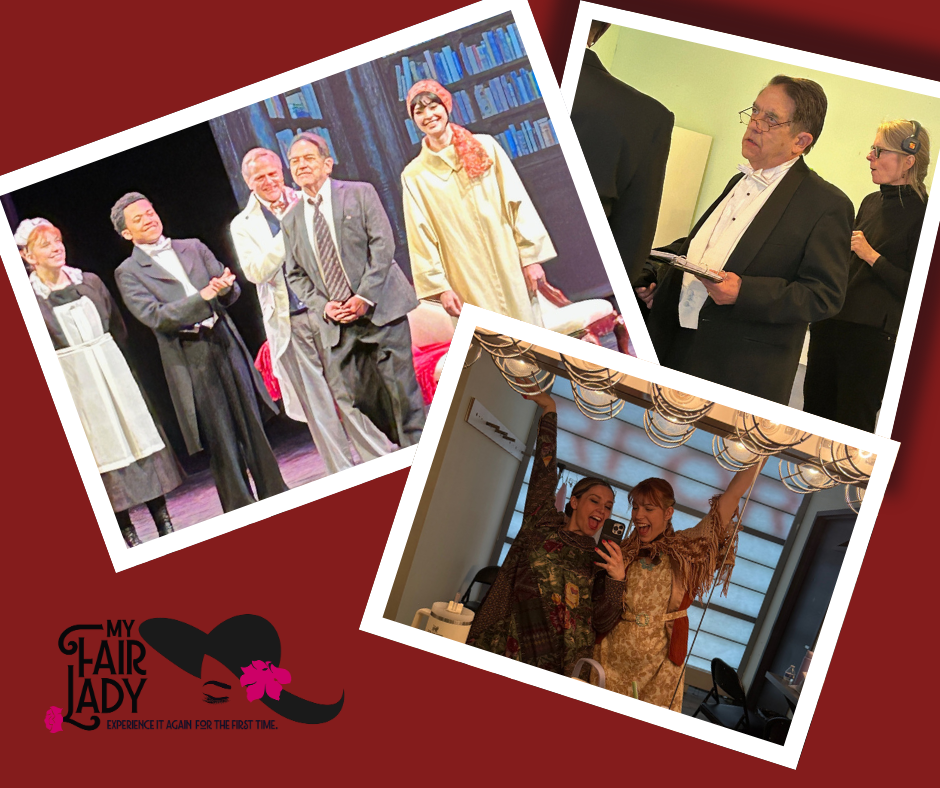
As ATG’s production of My Fair Lady approached the last weekend of its three-week run, Producing Artistic Director Jim Vagias was looking forward to enjoying his “swan song” at the company he co-founded and has led since 2012. As the final production of his ATG tenure, Jim relished the thought of sitting in the back of the theater, engrossed in the magic of one of his favorite musicals.
The theater gods had other plans.
The story begins on Thursday evening, as the production team brought in a new performer, Amelia Famularo, who stepped in for injured ensemble member Grace McLean. Choreographer Victoria Casillo explained, “When we were faced with the choice of either changing the choreography or putting someone new into the show, I knew who could step in. Amelia had done much of the choreography in some capacity, had seen the show, and had already built relationships with the team. I knew she could step in with very little time and deliver a beautiful performance—and that is exactly what she did. I am so grateful to Jaid Green (assistant choreographer/dance captain) and Paul Watt-Morse (assistant dance caption) who were essential in identifying the gaps we needed to fill following the injury. All of this work paid off—we had everything ready to go when Amelia joined us on such short notice.”
One crisis averted. Another was waiting in the wings.
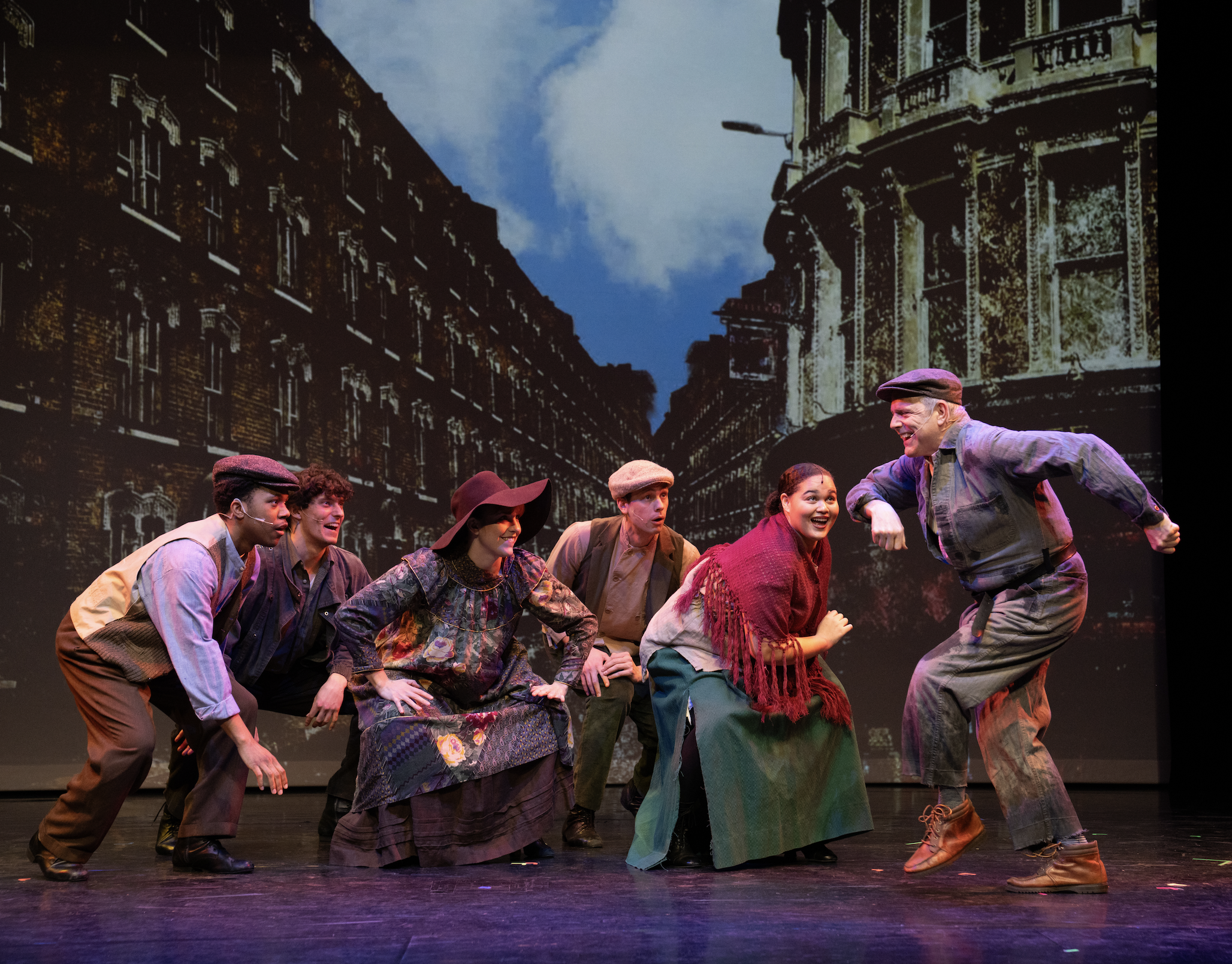
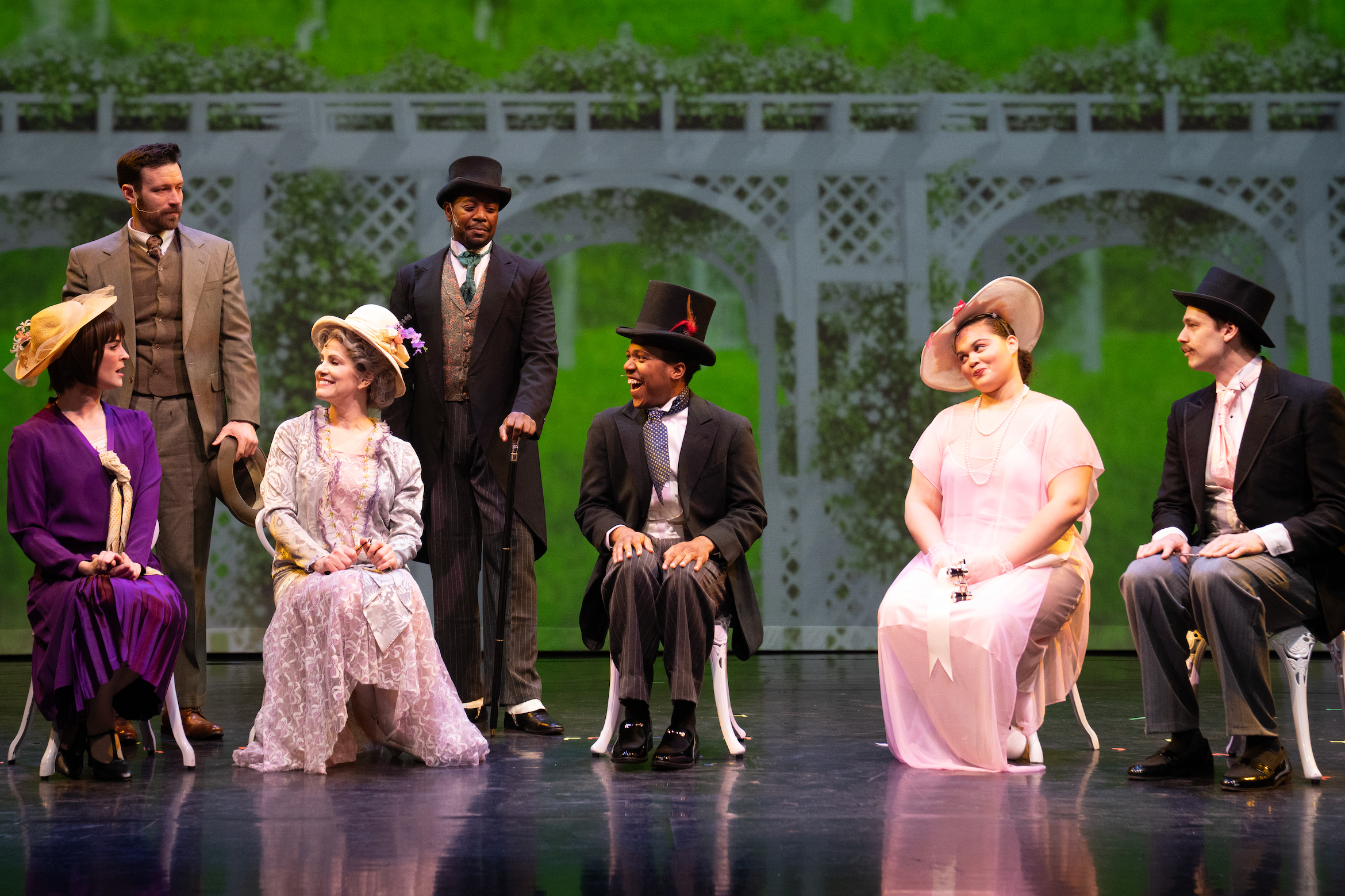
At noon on Friday, Production Stage Manager Griffin O’Connor received a call from actor Andrew Fehrenbacher, who masterfully portrayed Henry Higgins. He was very ill and could not perform that evening. With no understudy and only a few hours to spare, the production team decided they had no choice but to cancel that night’s performance.
The team, including Production Manager Cat Murphy, immediately began strategizing contingency plans in case Andrew would not be well enough to perform two shows on Saturday. They considered finding an actor who had previously done the role, but realized it was unrealistic for someone who had not seen ATG’s production to just step in cold, without knowing any blocking or movement, and there was no time for the amount of rehearsal that would be needed.
At that point, Jim, who has acted in the past, mentioned he had in fact performed the role 15 years prior. As the director, he knew the blocking and as a fan, had been singing along to the score for 60 years. The team quickly determined the only logical option was for Jim to step into the role if necessary. “Yes, it was terrifying,” he admits. “I knew I would go on stage with the script but I worried if I had the stamina to perform. Could I do the costume changes, could I still handle the fast-paced, dense lyrics? I was 99 percent sure I would power through, but that one percent of doubt was loud.”
Costume designer, Isabella Rossi, accompanied Jim on a quick trip home to comb his closet to select appropriate clothing he could wear as costumes. Fortunately, ATG’s costume collection did have a few extra pieces of formal wear available (apparently Jim’s personal tailcoat was at the cleaners…). Meanwhile, Griffin was calling each company member to inform them personally about what was happening. While they were worried about Andrew’s health, they appreciated the fact that practical plans were in place. And many company members, especially the veterans, had experienced similar situations and were prepared “to roll with the punches,” Griffin explained. Late Friday night, Jim, Music Director Amanda Dee and members of the creative team reviewed the music, staging and blocking for the entire show, just in case Jim had to assume the role. They headed home at 10pm, wishing for Andrew’s quick recovery.
The next morning, Andrew’s health had not improved.
It was decided then that Jim would perform. A 10 am “put-in” rehearsal was held with Jim and a few cast members. A dance break had to be cut to accommodate the short rehearsal time and some props had to be simplified because Jim would have a script in hand. “I had an enormous amount of faith that Jim could pull this off, but I couldn’t help but worry that some small errors could have ripple effects during the performance,” explained Griffin. “Would a costume change be delayed, a prop forgotten, a cue missed that would cause chaos?”
At 2pm, after an announcement about the casting change, Lerner and Loewe’s gorgeous overture began and the performance was underway. The incredible cast rallied around Jim and Amelia and every member shined. The audience cheered and showed their full support and seemed to enjoy being part of the excitement and unpredictability of live theater. “Yes, there were a few hiccups, but in general, the audience was unaware of the minor glitches,” noted Griffin.
When the curtain fell, Jim breathed an enormous sigh of relief. He was overwhelmed, but at least it was over.
Or so he thought – but Andrew unfortunately would not be able to return. Jim performed the remaining two shows over the two days. Each audience was enthusiastic and full of praise.
Reflecting back, Jim said because it was the production’s final weekend, he felt he had no choice but to do everything he could to ensure the show proceeded as planned. “Of course, there were financial considerations, but I didn’t want to disappoint patrons who were planning on seeing this beloved musical and I hated the thought that this dedicated, talented cast wouldn’t be able to perform the rest of the run,” he explained. “We’ve experienced challenges at ATG in the past, but on a personal level, nothing compared to the immediacy of this situation. I am immensely proud of how the company came together in a heartening display of support and professionalism.”
Griffin and Victoria expressed similar gratitude. “Everyone worked separately towards the same goal,” Griffin explained. “In the end, it was a very rewarding experience.”
Victoria added, “The moral of this story is that the people behind the scenes — dance captions, swings and understudies — are often the unsung heroes of the live musicals we love so much. They are some of the most skilled people in the theater: adaptable, calm under pressure, and natural leaders.”
Ah, yes -- and mighty “loverly.”